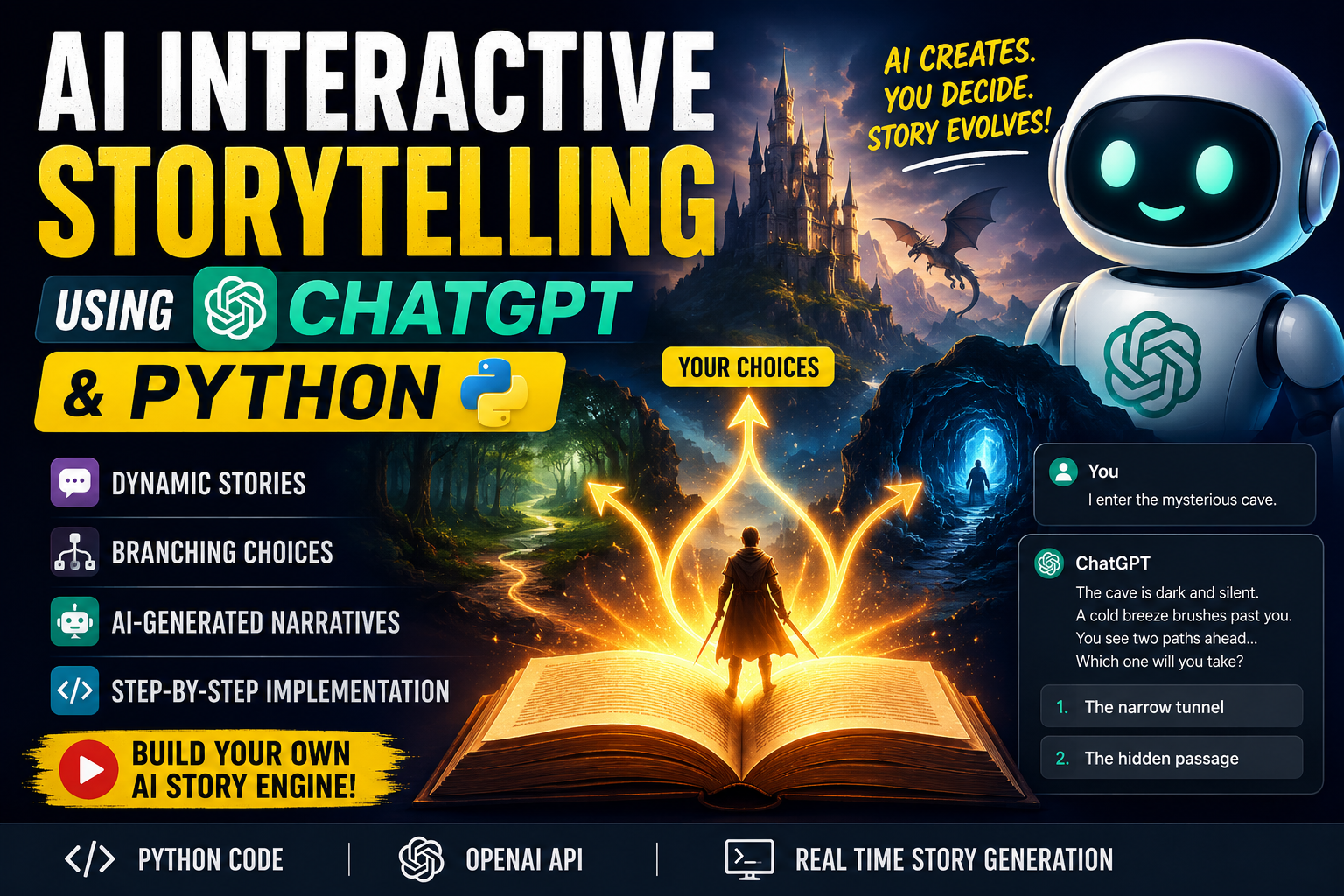
The Future of Dynamic AI-Powered Story Creation
Artificial Intelligence is transforming the way humans create content, interact with technology, and experience digital entertainment. One of the most exciting applications of Generative AI is Interactive Storytelling, where users can actively participate in a story while AI dynamically generates scenes, dialogues, and outcomes in real time.
With tools like ChatGPT and Python, developers, educators, gamers, and content creators can build intelligent storytelling systems that create unique adventures based on user decisions.
Unlike traditional storytelling, AI-powered interactive stories are not fixed. Every choice made by the participant can influence:
- character development
- plot progression
- alternate endings
- emotional interactions
- unexpected twists
This blog explains:
- what AI Interactive Storytelling is
- how it works
- architecture overview
- step-by-step implementation
- Python integration
- future applications
- benefits and challenges
What is AI Interactive Storytelling?
- AI Interactive Storytelling is a system where:
- A user provides input or decisions
- AI processes the context
- The story dynamically evolves
- Different outcomes are generated based on choices
- Instead of reading a predefined story, users become active participants inside the narrative.
- Example:
- User chooses to enter a mysterious cave
- AI generates a new adventure path
- Another user may choose a different route and experience a completely different storyline
- This creates:
personalized experiences
higher engagement
replayability
creativity enhancement
Traditional Storytelling vs AI Storytelling
Traditional Story AI Interactive Story Fixed storyline Dynamic storyline Same ending for everyone Multiple endings Passive audience Active participant Prewritten dialogues AI-generated dialogues Limited adaptability Real-time adaptation
How AI Interactive Storytelling Works
- The system combines:
- Large Language Models (LLMs)
- Prompt Engineering
- Context Management
- User Interaction
- Decision Trees
- Dynamic Narrative Generation
Architecture Overview
- Below is a simple AI storytelling workflow architecture.


Real-World Applications
1. Gaming
- AI-generated quests and NPC dialogues.
2. Education
- Interactive historical and science simulations.
3. Entertainment
- Dynamic movies and personalized adventures.
4. Therapy & Creativity
- Creative writing assistance and emotional storytelling.
5. Training Simulations
- Decision-based corporate and military training
Benefits of AI Interactive Storytelling
Personalized Experiences
Every user gets a unique story.
Unlimited Creativity
AI generates endless possibilities.
Higher Engagement
Users actively participate.
Rapid Content Generation
Stories can evolve instantly.
Educational Innovation
Makes learning interactive and immersive.
Challenges
Maintaining Story Consistency
AI may sometimes forget context.
Hallucinations
The AI may generate illogical events.
Context Length Limitations
Long stories require memory optimization.
Ethical Considerations
AI-generated content should be moderated.
Future of AI Storytelling
The future may include:
- voice-controlled storytelling
- AI-generated movies
- VR interactive worlds
- multiplayer AI adventures
- persistent AI memory systems
- emotion-aware storytelling
As Agentic AI evolves, storytelling systems may become autonomous virtual worlds capable of adapting continuously to each user.
Conclusion
AI Interactive Storytelling represents a powerful combination of:
- Generative AI
- creativity
- gaming
- conversational interfaces
- dynamic content generation
Using ChatGPT and Python, anyone can build immersive storytelling systems that adapt in real time based on human decisions.
This technology is not only transforming entertainment but also opening new possibilities in:
- education
- training
- creativity
- simulation systems
- AI-powered applications
The future of storytelling is no longer static.
It is interactive, intelligent, and evolving.