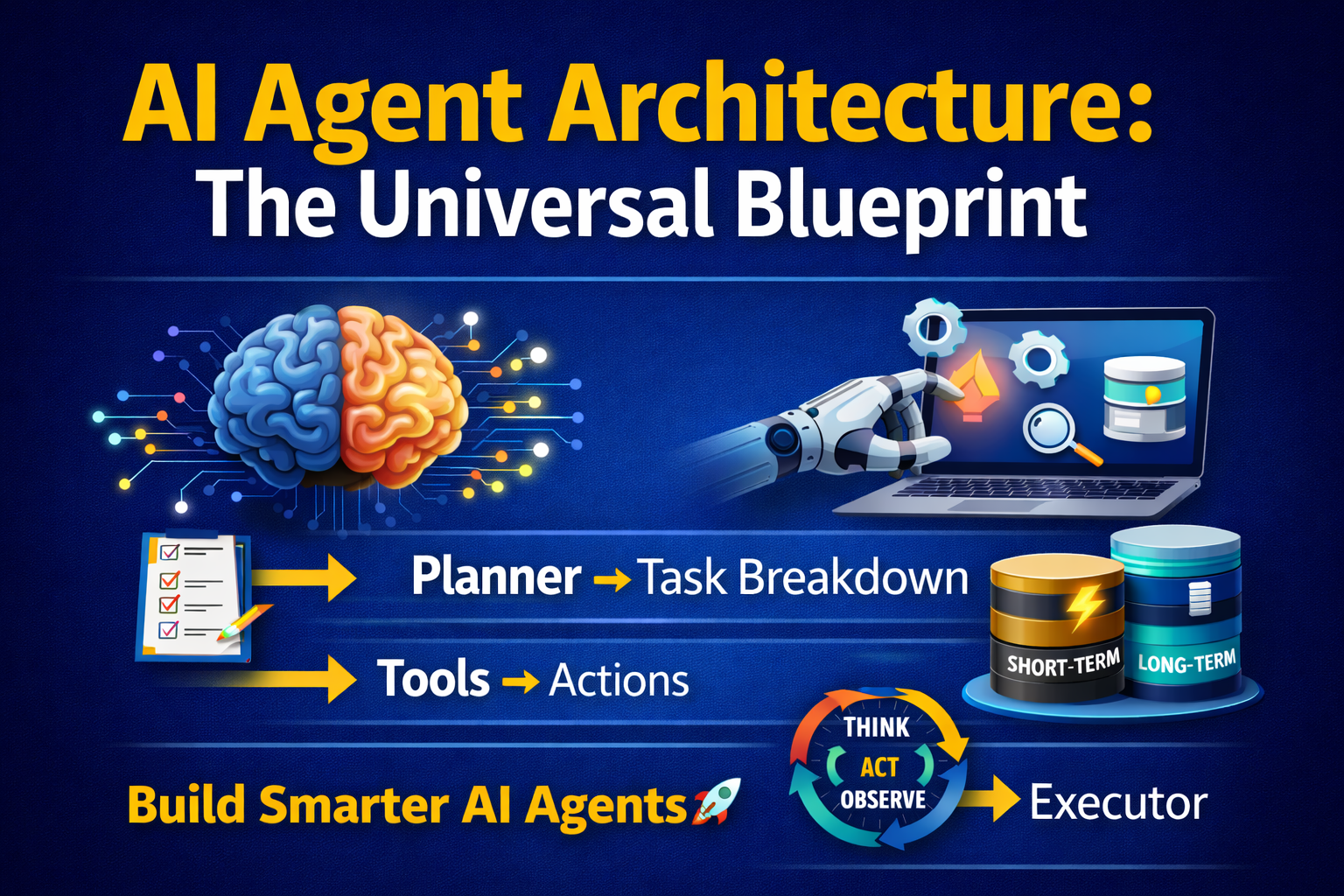
Artificial Intelligence is rapidly evolving from simple chatbots to powerful systems that can think, plan, and act autonomously. This shift is driven by what we call Agentic AI — systems designed not just to respond, but to solve problems step-by-step. At the heart of this transformation lies a universal blueprint for AI agent architecture. Whether you are building a chatbot, automation system, or autonomous agent, this architecture provides a structured way to design intelligent systems. In this blog, we will break down this universal blueprint in a simple, step-by-step manner so that you can understand and start building your own AI agents.
What is AI Agent Architecture?
AI Agent Architecture defines how different components of an AI system work together to perform tasks intelligently.
Instead of a simple:
- Input → Output
We now have:
- Input → Think → Plan → Act → Learn → Output
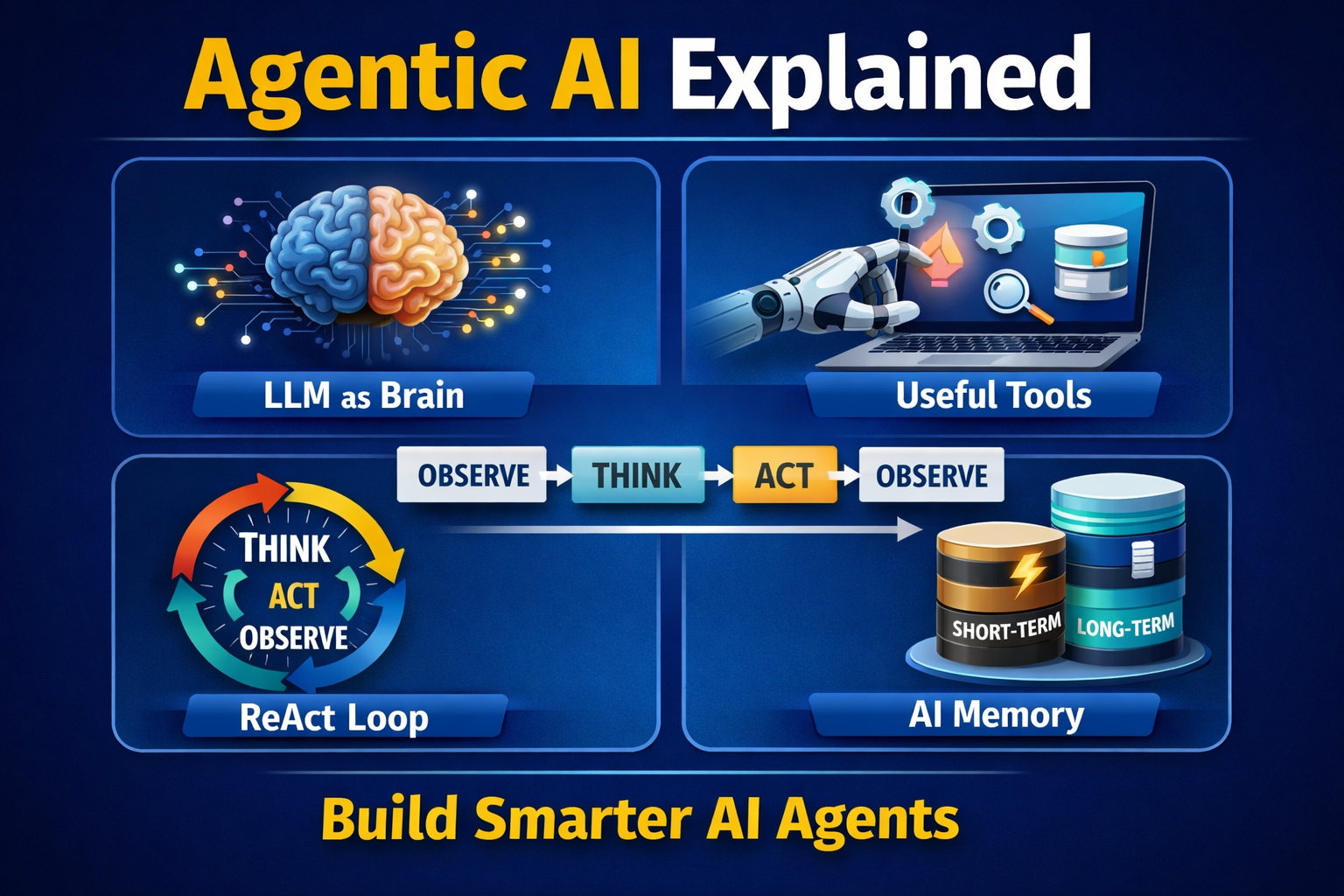
Core Agent Loop
- Observe→Think→Act→Observe
- This loop runs continuously until the task is completed.
LLM – The Brain of the Agent
- The Large Language Model (LLM) is the decision-making core of the system.
Responsibilities:
- Understand user input
- Generate reasoning steps
- Decide next action
Example:
- User: “Plan a trip to Goa”
LLM: - Understands intent
- Decides steps (search, compare, book)
Input Layer (User Interface)
- This is where the agent interacts with the outside world.
Types of input:
- User queries
- API requests
- System triggers
- This layer ensures smooth communication between users and the agent.
Planner (Task Decomposition)
- The planner breaks a complex task into smaller steps.
Task: “Book a flight”
- Planner splits into:
- Search flights
- Compare prices
- Select best option
Book ticket
This is what makes agents intelligent and structured
Tools / Actions Layer
- Tools allow the agent to perform real-world actions.
Examples:
- APIs (weather, travel, finance)
- Databases
- Calculators
- Web search
Tool Flow
- LLM decides → which tool to use
- Tool executes → returns result
- LLM processes → continues
This is where AI becomes action-oriented
Memory (Short-Term & Long-Term)
Memory enables agents to learn and adapt
Short-Term Memory
- Stores current conversation
- Temporary
Long-Term Memory
- Stores historical data
- Persistent
Memory Flow
- Retrieve past context
- Combine with current input
- Improve response
This makes AI context-aware
Steps:
- Thought → Reason
- Action → Tool call
- Observation → Result
- Repeat
This enables:
- Step-by-step thinking
- Dynamic decision-making
Executor Layer
The executor is responsible for:
- Running actions
- Calling APIs
Returning outputs
It acts as the execution engine of the agent.
Knowledge Base
- This is where external data is stored.
Sources:
- Documents
- Databases
- Vector stores
Helps the agent:
- Retrieve accurate information
- Improve decision-making
Putting It All Together
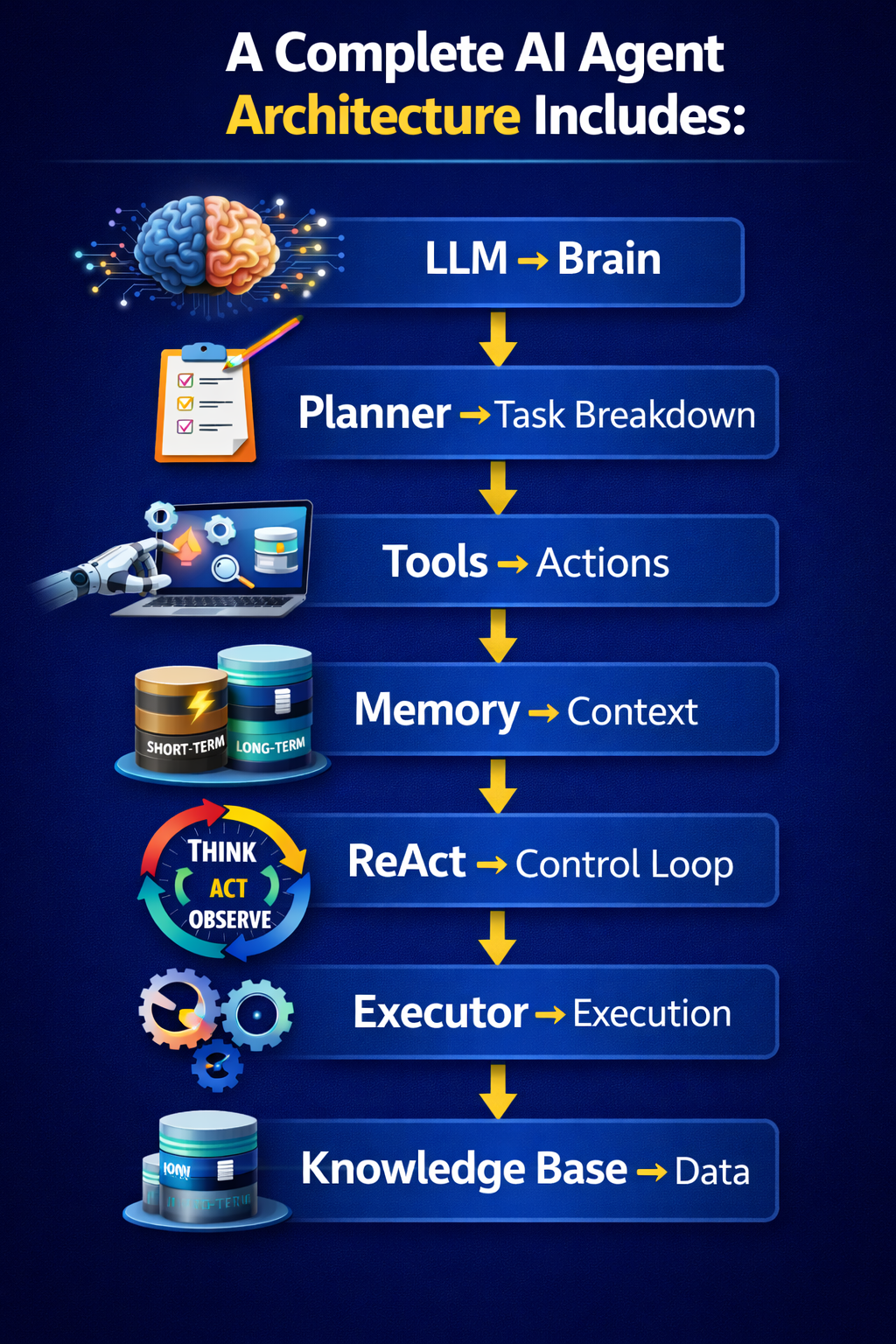
- A complete AI agent architecture includes:
- LLM → Brain
- Planner → Task breakdown
- Tools → Actions
- Memory → Context
- ReAct → Control loop
- Executor → Execution
- Knowledge Base → Data
Together, they create a system that can:
Think → Plan → Act → LearnWhy This Blueprint Matters
- Standardizes AI system design
- Enables scalable architectures
- Helps build real-world AI applications
This is the foundation of:
- AI assistants
- Autonomous systems
- Intelligent workflows
Conclusion
AI Agent Architecture provides a universal blueprint for building intelligent systems that go beyond simple responses. By combining LLMs with planning, tools, memory, and structured reasoning through frameworks like ReAct, developers can create systems capable of solving complex, real-world problems. As AI continues to evolve, understanding and applying this architecture will be essential for building the next generation of autonomous systems. If you are serious about AI engineering, mastering this blueprint is your first step toward building powerful and scalable AI agents.
Want to go deeper?
- 🎥 Watch full playlist: https://www.youtube.com/playlist?list=PLaxFq-s26sqB08V28Rlyz0-xuDfvDNffH
- 📖 Explore more blogs: https://teltam.in/#blogs