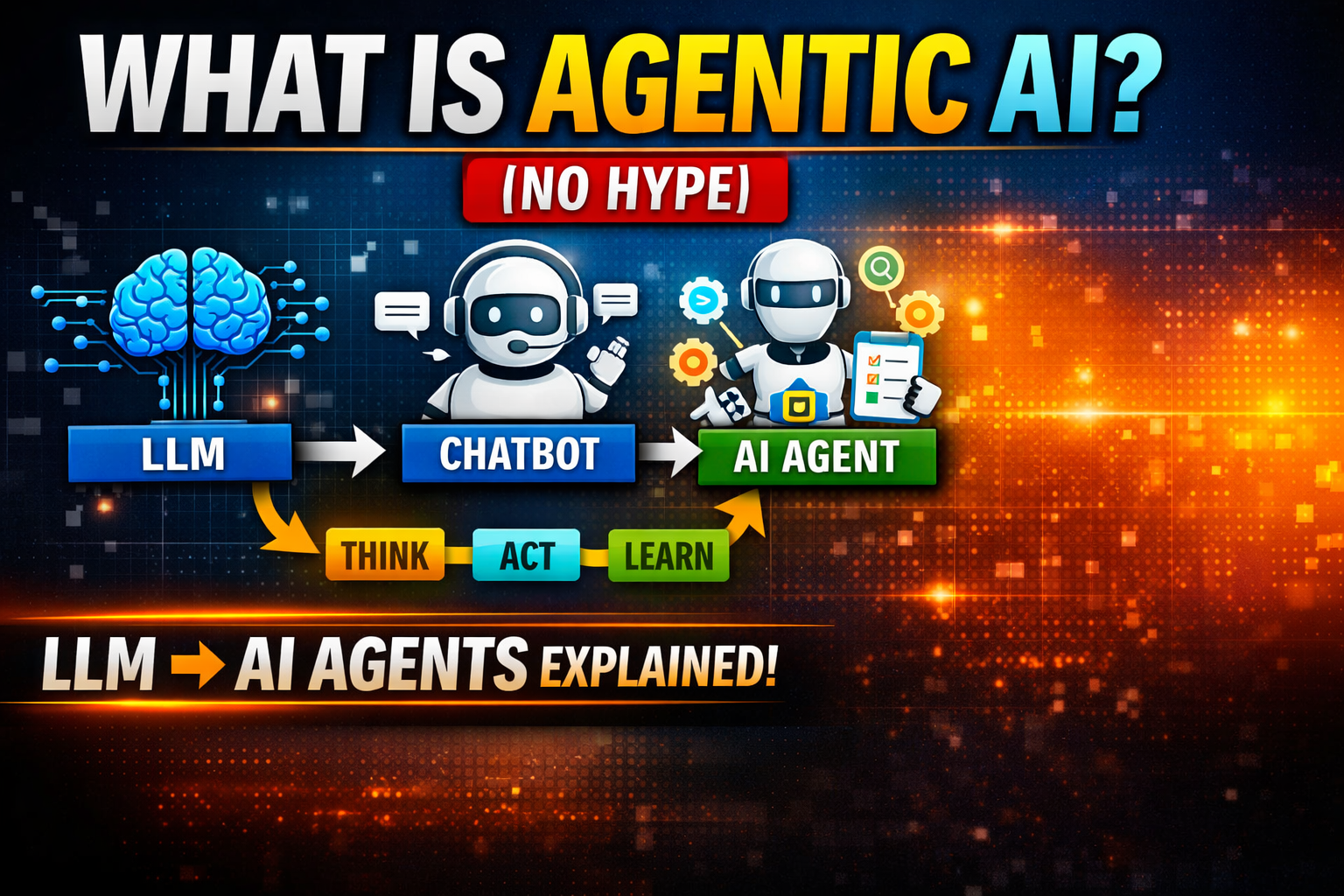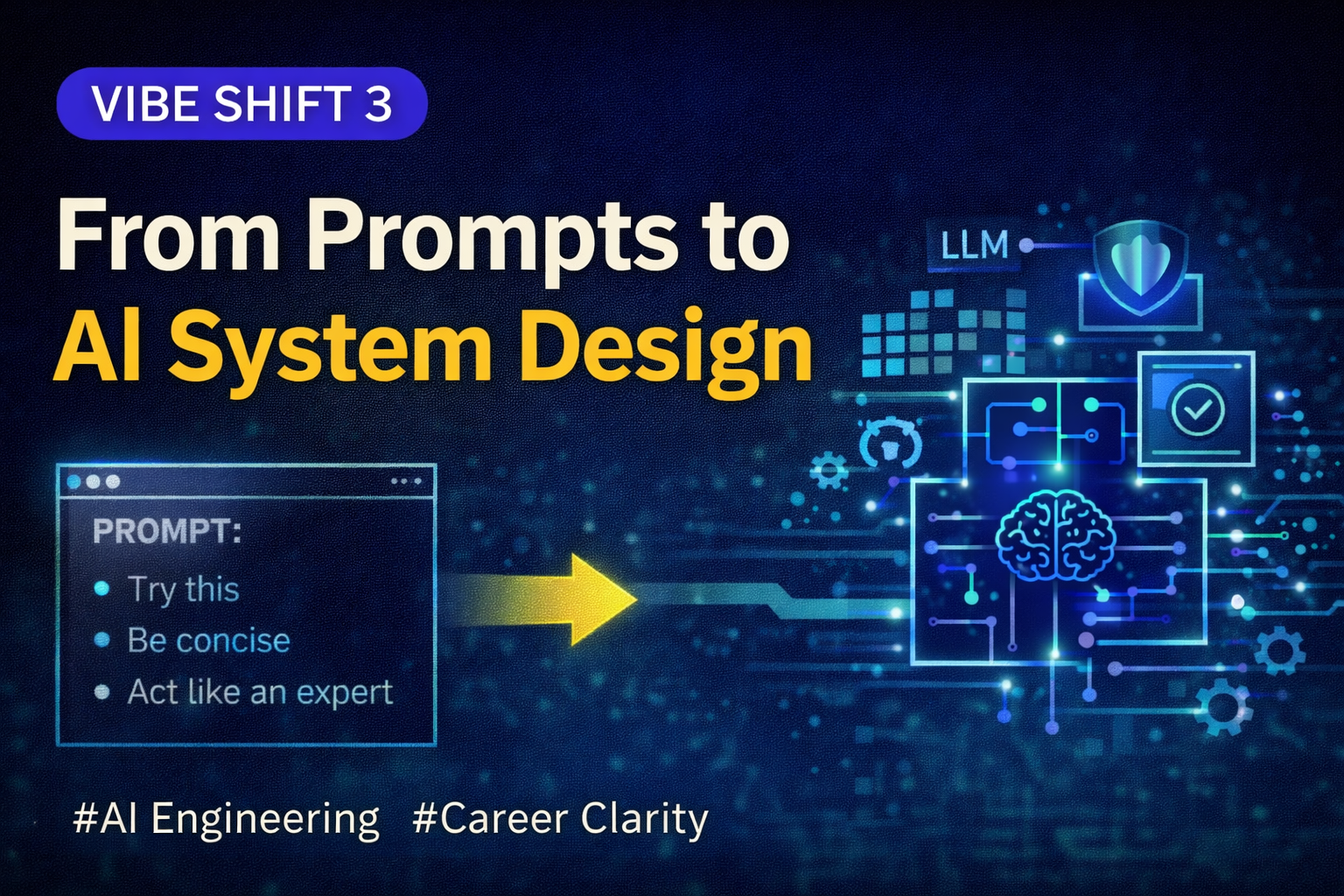
Artificial Intelligence is evolving rapidly—from simple chatbots to systems that can think, act, and complete tasks autonomously.
Two important concepts driving this shift are:
- AI Agents
- Agentic AI
Let’s understand them clearly with real-world engineering examples.
What is an AI Agent?
An AI Agent is more than just a chatbot.
It is an LLM (Large Language Model) combined with:
- Tools
- Permissions
- A defined Persona
Key Idea
Chatbot → Talks
AI Agent → Acts
Simple Explanation
A normal AI like ChatGPT gives answers.
But an AI Agent:
- Executes tasks
- Uses tools
- Interacts with systems
Example
GCP Use Case (on Google Cloud Platform)
A BigQuery Specialist Agent:
- Connects to your dataset
- Runs SQL queries
- Monitors cost
Alerts if cost exceeds $10
This is action-oriented AI.
Modern AI Pro (Mithra AI) Balaji Insight
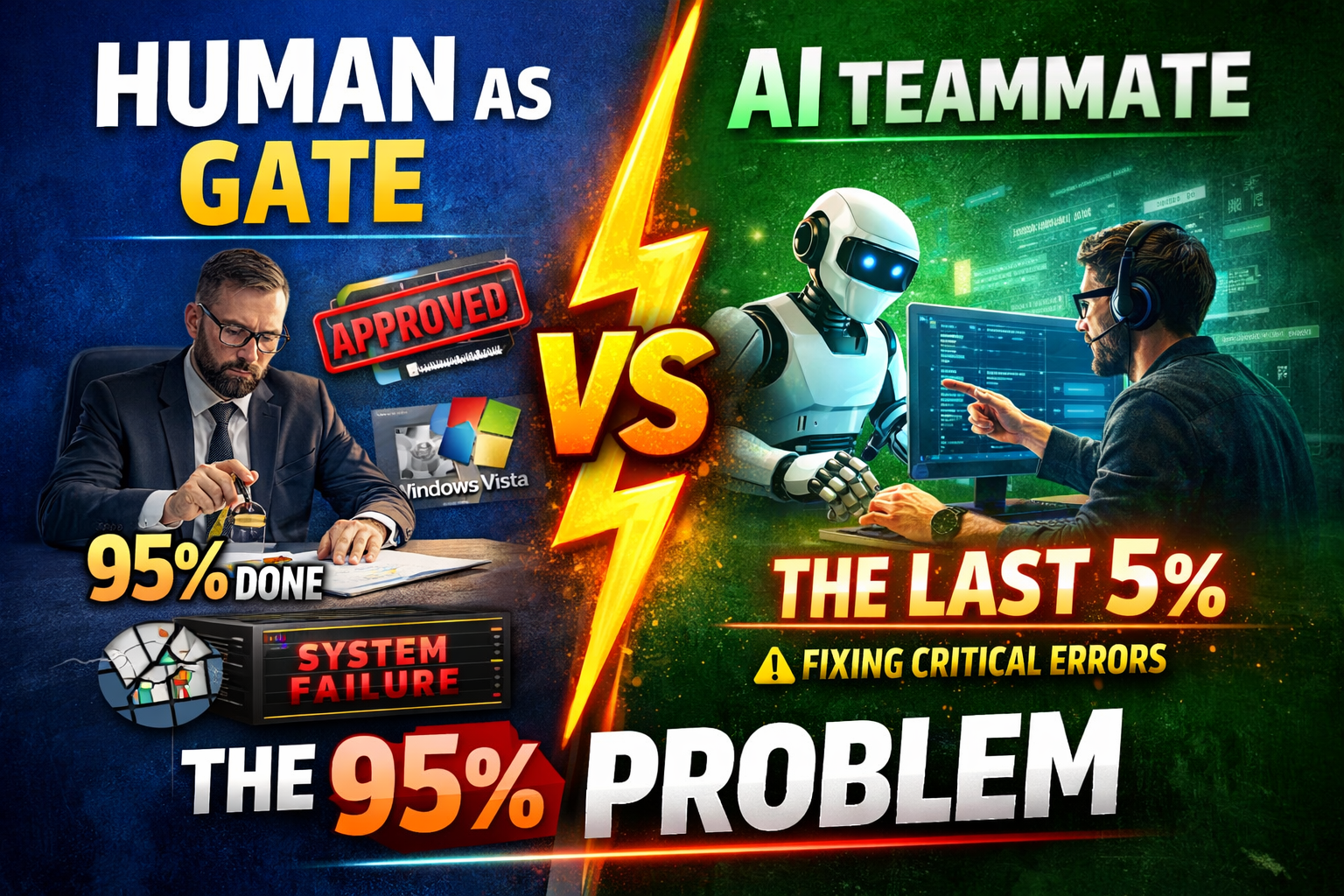
Moving from 95% automation → final 5% precisionThis last 5% is where AI Agents deliver real value.
What is Agentic AI?
Agentic AI is not just one agent.
It is a system where AI works in a loop.
The Core Loop
Plan → Execute → Observe → Re-planKey Characteristics
- Multi-step reasoning
- Self-correction
- Goal-driven execution
Example
GCP Scenario
A system monitoring Cloud Run:
- Detects traffic spike
- Identifies bottleneck
- Suggests memory upgrade
- Calculates ROI
This is continuous decision-making AI
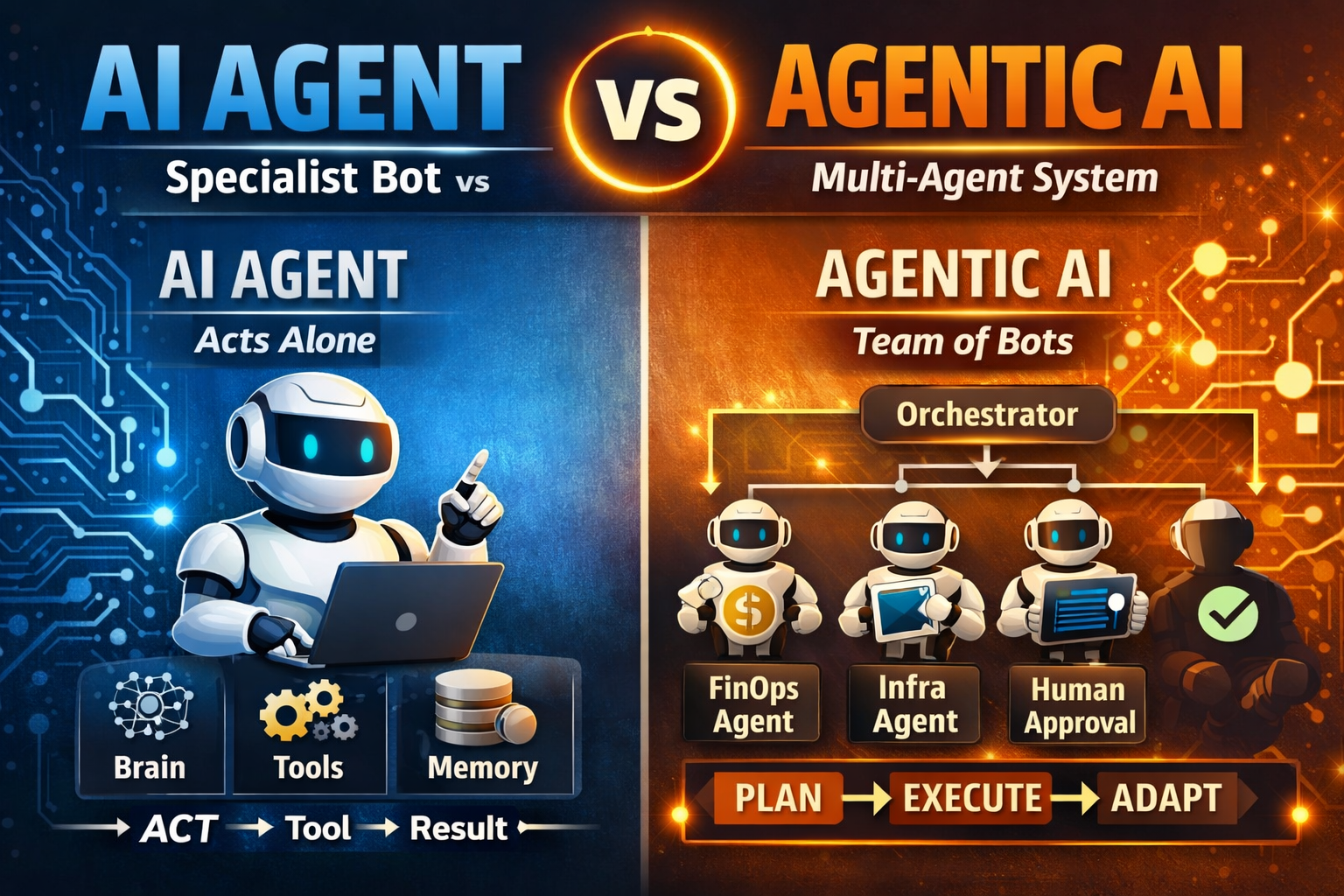
AI Agent vs Agentic AI
| Feature | AI Agent | Agentic AI |
| Identity | Single Worker | Team / workflow |
| Logic | if X -> Tool Y | Try → Analyze → Retry |
| Autonomy | Needs prompts | Works toward goal |
| Capability | Task execution | End-to-end problem solving |
Simple Analogy
AI Agent → Individual developer
Agentic AI → Full engineering team
Architecture of an AI Agent
Think of an AI Agent like a human system.
The Brain (LLM)
- Reasoning engine
- Example: Gemini / GPT models
The Hands (Tools)
- APIs
- Python functions
- Search tools
Memory
Short-Term
- Chat history
Long-Term
- RAG (Retrieval-Augmented Generation)
- Uses knowledge base / documents
Planning
- Defined using System Prompt
- Breaks tasks into steps
Flow
		User Input
		↓
		LLM (Reasoning)
		↓
		Tool Selection
		↓
		Execution
		↓
		Response
Architecture of Agentic AI (Multi-Agent System)
This is where things become powerful
Instead of one agent, we build a team of agents.
System Layers
Orchestrator
- Receives goal
- Decides which agent to use
Example:
Deploy scalable app on GCPSpecialist Agents
FinOps Agent
- Uses pricing APIs
- Estimates cost
Infra Agent
- Writes Terraform code
- Designs architecture
Human-in-the-Loop (HITL)
- Critical component
- System pauses before execution
- Human approves
Key Insight
AI = Teammate
Human = Team Leader
Why Agentic AI Matters (ROI Perspective)
This is very important for real-world adoption.
Traditional AI Billing
Pay for tokens (usage)Agentic AI Value
Pay for outcomes (results)Example
Instead of:
- Paying for multiple prompts
You get:
- Fully deployed system
- Cost analysis
- Optimized architecture
This makes it highly relevant for:
- IT Managers
- Architects
- Product teams
Final Thoughts
AI is evolving from:
Assistant → Agent → Autonomous SystemKey Takeaways
- AI Agents perform tasks using tools
- Agentic AI builds intelligent workflows
- Multi-agent systems mimic real engineering teams
- Human oversight remains critical
Closing Line
The future of AI is not just answering questions…
It is completing real-world work autonomously.
Next Step
- Start exploring AI Agents
- Build simple agent workflows
- Move toward Agentic AI systems