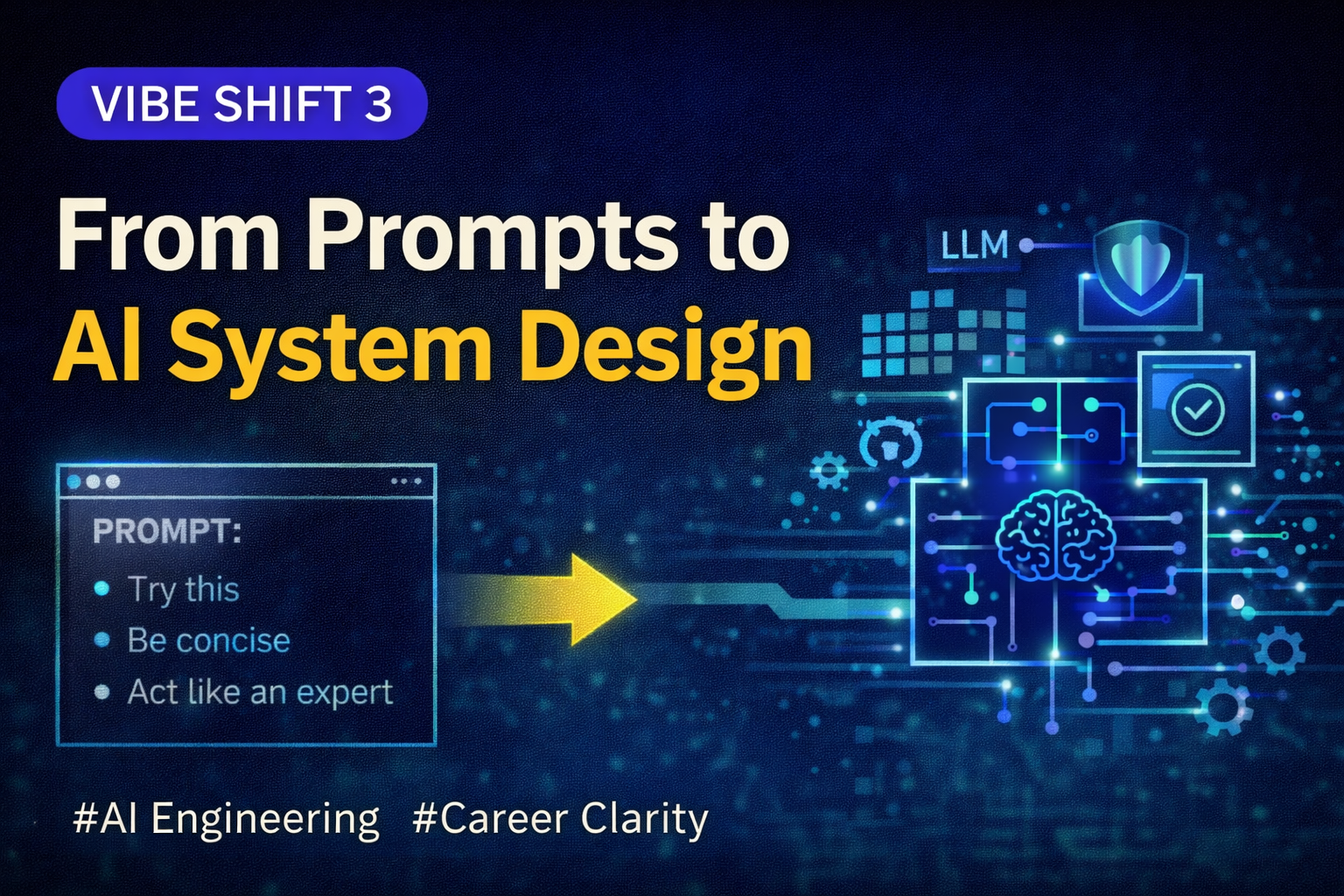
The way we build software is changing faster than ever. With AI agents writing code, generating architectures, and even reviewing pull requests, engineers are no longer just coders.
But here’s the uncomfortable truth:
Are we still in control… or just approving what AI generates?
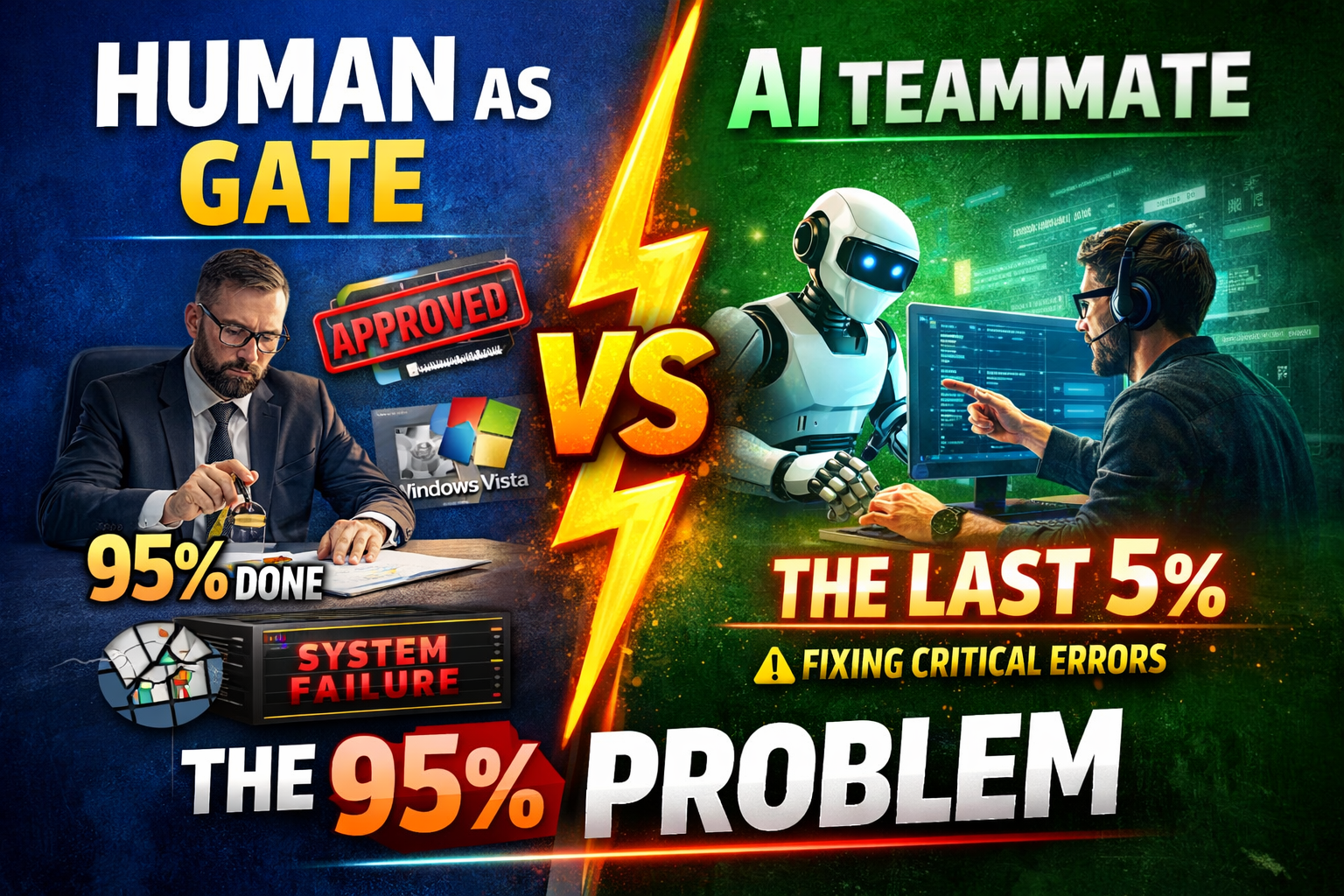
This shift—from Human-as-a-Gate to Human-as-a-Teammate—is one of the most important transitions in modern engineering.
Let’s break it down step by step.
Step 1: Understanding the “95% Problem” (The Nuance Gap)
AI is incredibly powerful.
It can:
- Generate APIs
- Write pipelines
- Suggest architectures
- Fix bugs
But it usually gets you only 95% there.
That last 5% is where real engineering lives.
What is inside that 5%?
- Edge cases
- System-specific hacks
- Legacy constraints
- Performance bottlenecks
- Business logic nuances
This is called the Nuance Gap
Diagram 1: The 95% vs 5% Reality
AI Contribution: ████████████████████████████████ 95%
Human Expertise: ██ 5%

But...

Risk Impact:
AI Errors (95% part): Low Risk ⚪
Nuance Errors (5% part): HIGH RISK 🔴
Why this is dangerous
When engineers stop coding and only supervise:
- They lose deep system understanding
- They miss subtle failures
- They become “approvers” instead of “builders”
This leads to Skill Atrophy.
Over time, teams lose the ability to debug real production issues.
Step 2: Redefining “Human in the Loop”
Traditionally, we thought:
“AI builds → Human reviews → Done”
But this model is broken.
Let’s compare
| Model | Human Role | Risk |
|---|---|---|
| Human as Gate | Final approver | Rubber-stamping, missing context |
| Human as Teammate | Co-builder | Higher effort, but safer systems |
The Cockpit Analogy
Think about a pilot.
Even with autopilot:
- The pilot doesn’t leave the cockpit
- They monitor continuously
- They take control during critical moments
Software engineering must follow the same model.
Diagram 2: Gate vs Teammate Model
OLD MODEL (Gate):
AI → Code → Human Review → Production
             ❌ Low understanding

NEW MODEL (Teammate):
Human ↔ AI ↔ Code ↔ Feedback Loop
   ✅ Continuous involvement
   ✅ Deep understanding
   ✅ Better decisions
Step 3: The Speed vs Safety Paradox
AI enables Vibe Coding (fast, intuitive development).
But speed introduces new risks.
Common misconception:
“If AI is faster, we can reduce process”
Reality:
Higher speed requires stronger control
Airplane Logic
- Cruise mode (90% journey) → can be automated
- Takeoff & landing (critical decisions) → must be human-controlled
In software:
- Architecture decisions = Takeoff
- Production deployment = Landing
The Tool Illusion
- Many teams rely on:
- AI code reviewers
- Automated validation tools
But here’s the problem:
If builder AI and reviewer AI are similar…
They share the same blind spotsResult:
- Bugs pass through
- Bad patterns get reinforced
Step 4: Multi-Agent Systems (Powerful but Risky)
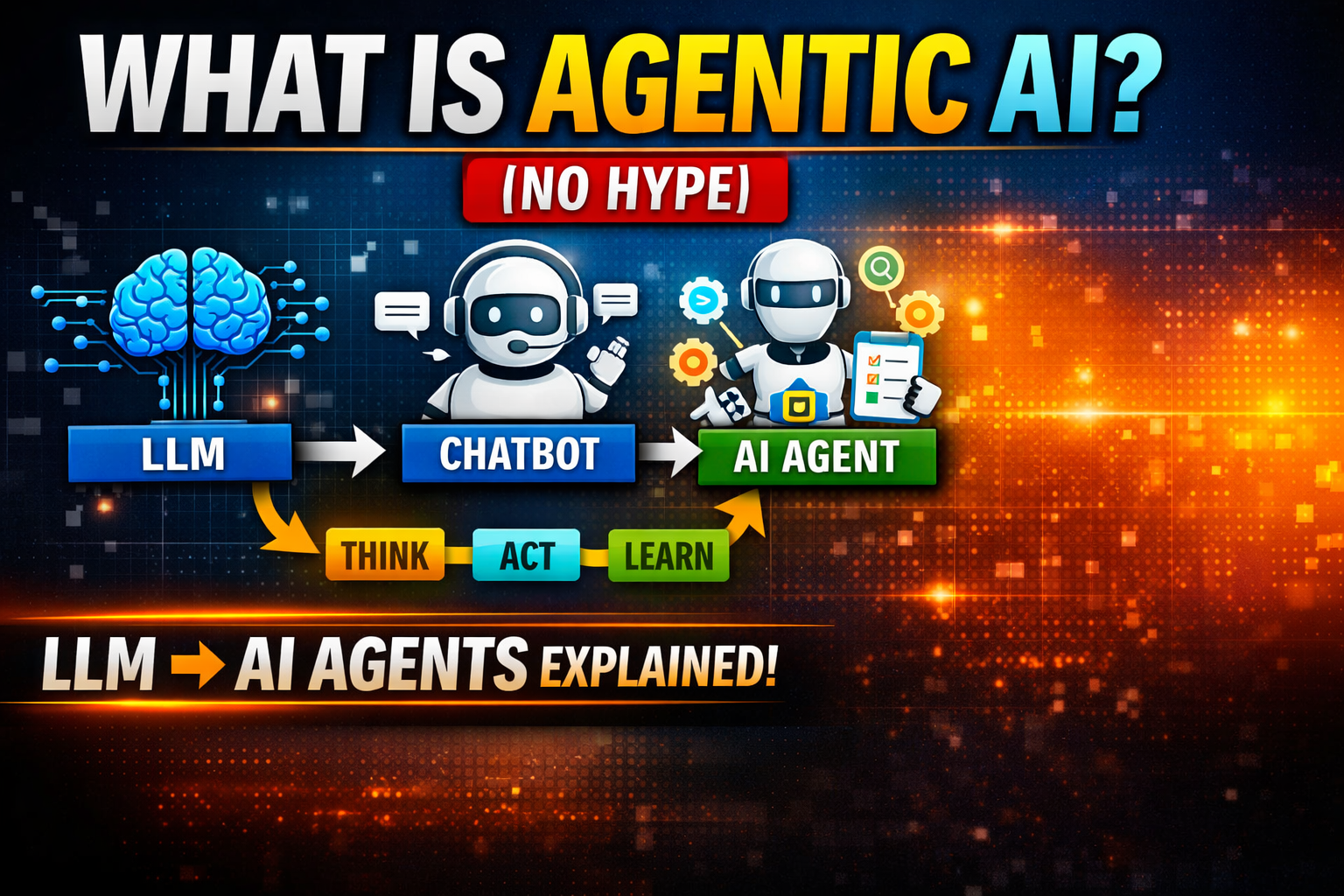
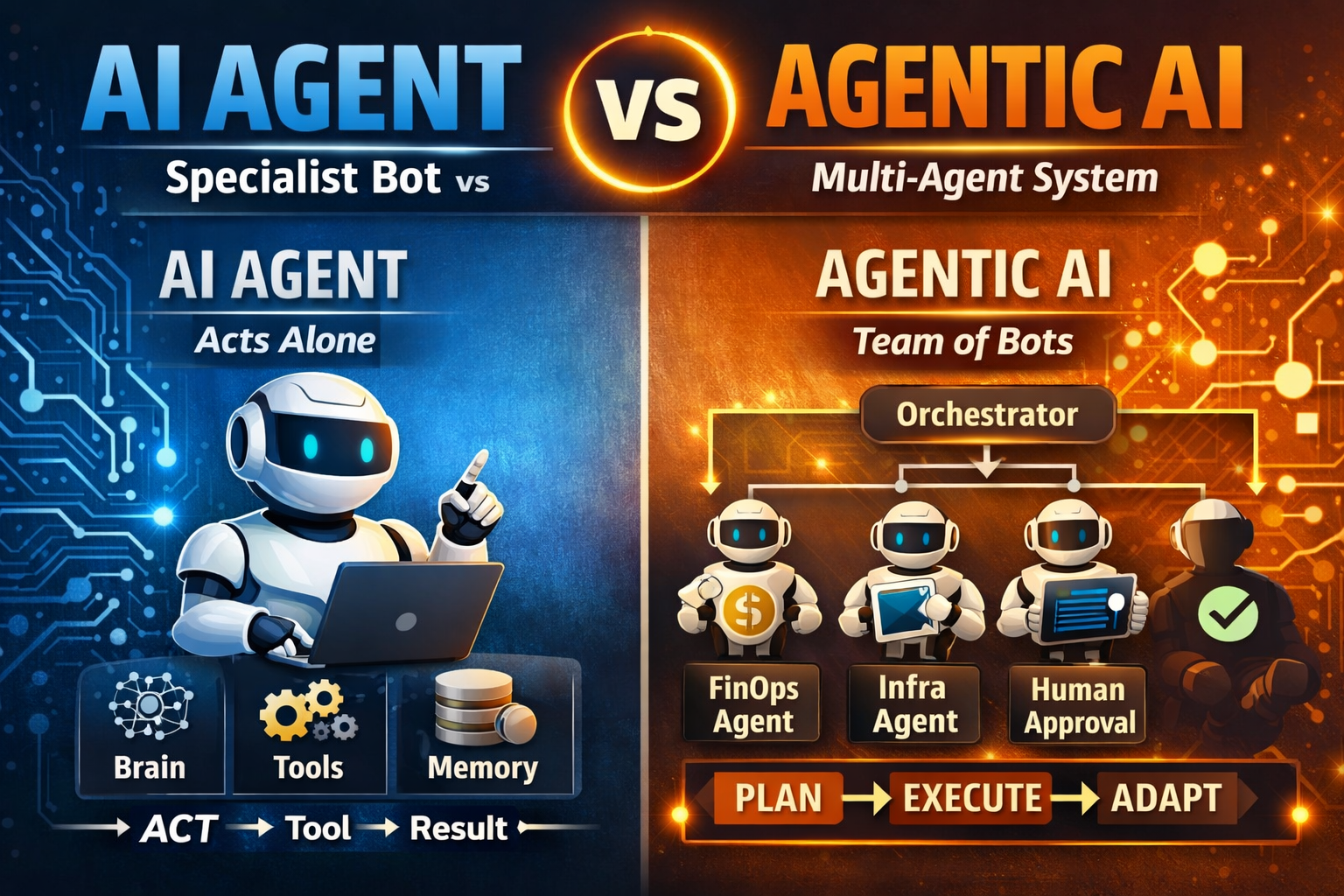
Modern setups use multiple AI agents:
- CEO Agent → Defines goal
- Engineering Manager → Plans tasks
- Developer Agent → Writes code
- Reviewer Agent → Checks code
Examples of frameworks:
- GStack-style architectures
- Sprint-based agent workflows
Hidden Risk
- If humans are not deeply involved:
- Agents may optimize for speed over quality
- Decisions may ignore real-world constraints
- Systems become fragile
Step 5: Critical Questions for Cloud & AI Systems
- If you are using platforms like:
- Google Cloud Platform
- Cloud Run
- BigQuery
You must ask these questions:
1. Why this service?
Did AI choose it by default?
Or is it truly optimal for your workload?
2. What happens if traffic doubles?
Auto-scaling configured?
Any hidden bottlenecks?
3. Where does cost explode?
Recursive loops (e.g., Pub/Sub triggers)
Inefficient queries
Over-provisioning
4. What trade-offs were made?
Speed vs maintainability
Cost vs performance
Simplicity vs scalability
Final Thought: The Future Engineer
- The future is NOT:
- ❌ Just coding
❌ Just prompting AI
❌ Just reviewing outputs
The Real Role
A great engineer will be:
A system thinker
A co-creator with AI
A decision-maker in critical moments
A guardian of the last 5%
Closing Line
AI can build systems faster than ever.
But only humans can ensure they don’t break in the real world.
👉 Don’t become a gatekeeper.
👉 Become a teammate.