Introduction: A Viral Statement That Sparked Debate
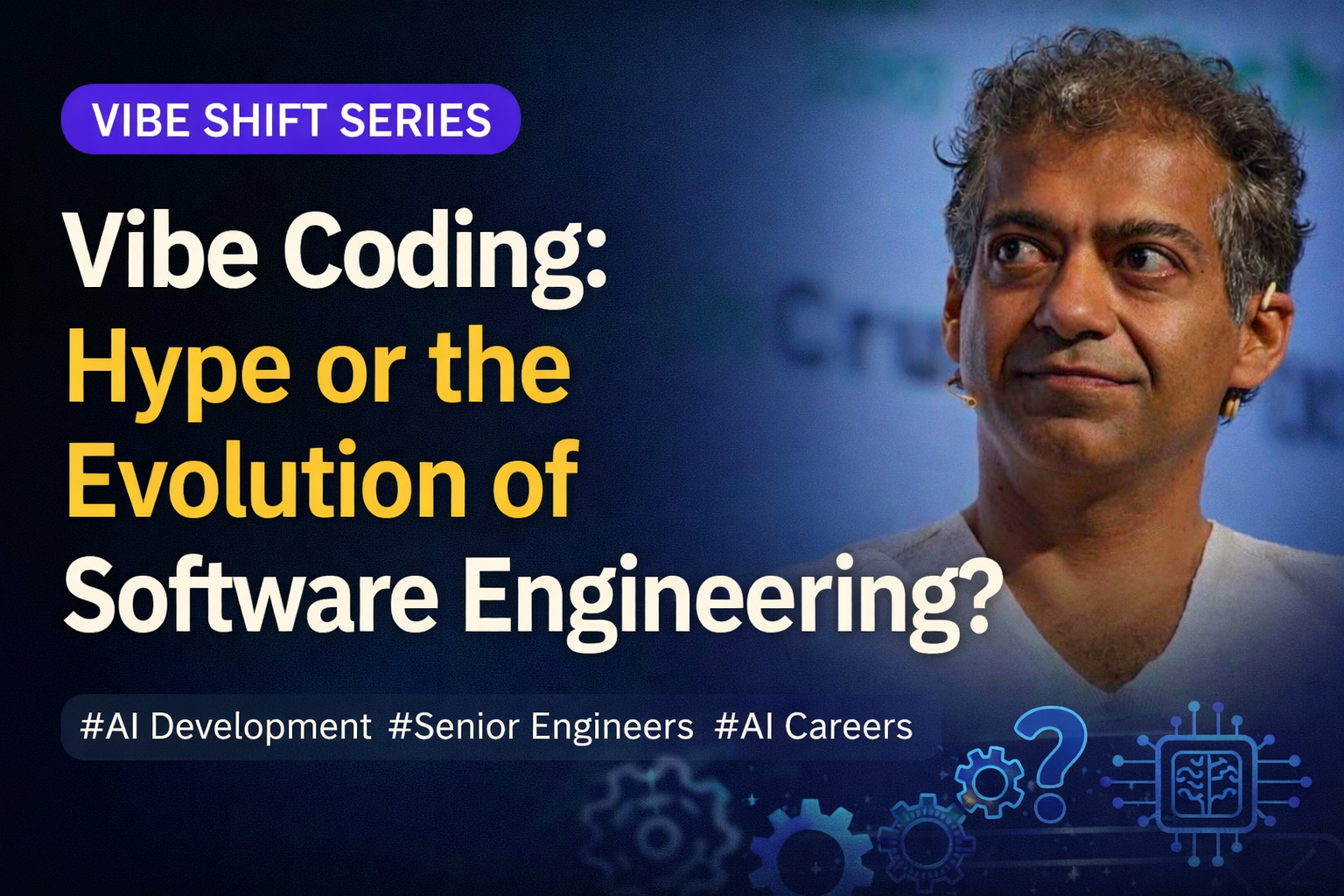
“Vibe coding is the new product management. Training & tuning models is the new coding.”
This statement has been circulating widely in AI and engineering communities.
Some people celebrate it.
Some people fear it.
Some dismiss it as hype.
But beneath the noise, there is a real shift happening in software engineering.
The question is not whether coding is dead.
The real question is:
Is the nature of coding changing?
Let’s explore this calmly, technically, and practically.
What Is “Vibe Coding”?
Vibe coding refers to a development approach where:
- Engineers describe intent in natural language
- AI generates initial code
- Developers refine and orchestrate the output
- Iteration happens through prompts rather than manual syntax
Instead of writing:
def upload_file():
You now say:
Build a FastAPI endpoint that stores JSON data into Azure Blob Storage with validation.
And an AI model generates the structure.
This does not eliminate engineering.
It changes the interface between human and machine.
The Real Shift: From Syntax to Systems
Let’s understand the deeper transformation.
Old Engineering Model
Engineer → Write Code → Compile → Deploy → Maintain
Primary value:
- Syntax knowledge
- Framework familiarity
- Manual implementation
New AI-Augmented Model
Engineer → Define Intent → Model Generates → Engineer Orchestrates → Deploy → Monitor → Optimize
Primary value:
- System design
- Prompt clarity
- Model evaluation
- Integration thinking
- Cost optimization
Diagram 1: The Shift
Traditional Development:
Human Logic → Manual Code → Application
AI-Augmented Development:
Human Intent → AI Model → Refined System → Production Pipeline
The human is not removed.
The human moves up the abstraction layer.
Is Coding Becoming Irrelevant?
No.
But low-level repetitive coding is becoming automated.
Examples:
- CRUD APIs
- Basic validation logic
- Boilerplate code
- Standard configuration scripts
AI handles these efficiently.
However, AI still struggles with:
- Complex system architecture
- Business logic reasoning
- Trade-off decisions
- Production reliability design
- Edge case engineering
That is where engineers remain critical.
What Is Actually Increasing in Value?
The following skills are becoming more valuable:
1. System Thinking
Designing how components interact.
2. AI Orchestration
Combining:
- LLMs
- Vector databases
- Retrieval pipelines
- APIs
- Guardrails
3. Model Evaluation
Understanding:
- Hallucinations
- Token usage
- Latency
- Cost vs accuracy trade-offs
4. Cloud Integration
Deploying AI systems on:
- Azure
- AWS
- GCP
- Kubernetes
Diagram 2: Modern AI System Stack
User Query
↓
Frontend
↓
API Layer
↓
Orchestration Layer (LangChain / Custom Logic)
↓
LLM + Vector DB
↓
Monitoring + Guardrails
↓
Cloud Infrastructure
Notice something important:
Most of the complexity is not in writing syntax.
It is in designing flow.
Why This Matters for Senior Engineers
If you are an experienced engineer, this shift affects you differently than freshers.
Freshers must learn fundamentals.
Senior engineers must:
- Move from implementation to architecture
- Understand AI lifecycle
- Think about production-grade systems
- Focus on evaluation and governance
- Learn orchestration frameworks
The risk is not AI replacing you.
The risk is staying at the syntax level.
What “Training & Tuning Is the New Coding” Really Means
It does not mean everyone will train foundation models.
It means:
- Fine-tuning models for domain tasks
- Adjusting prompts strategically
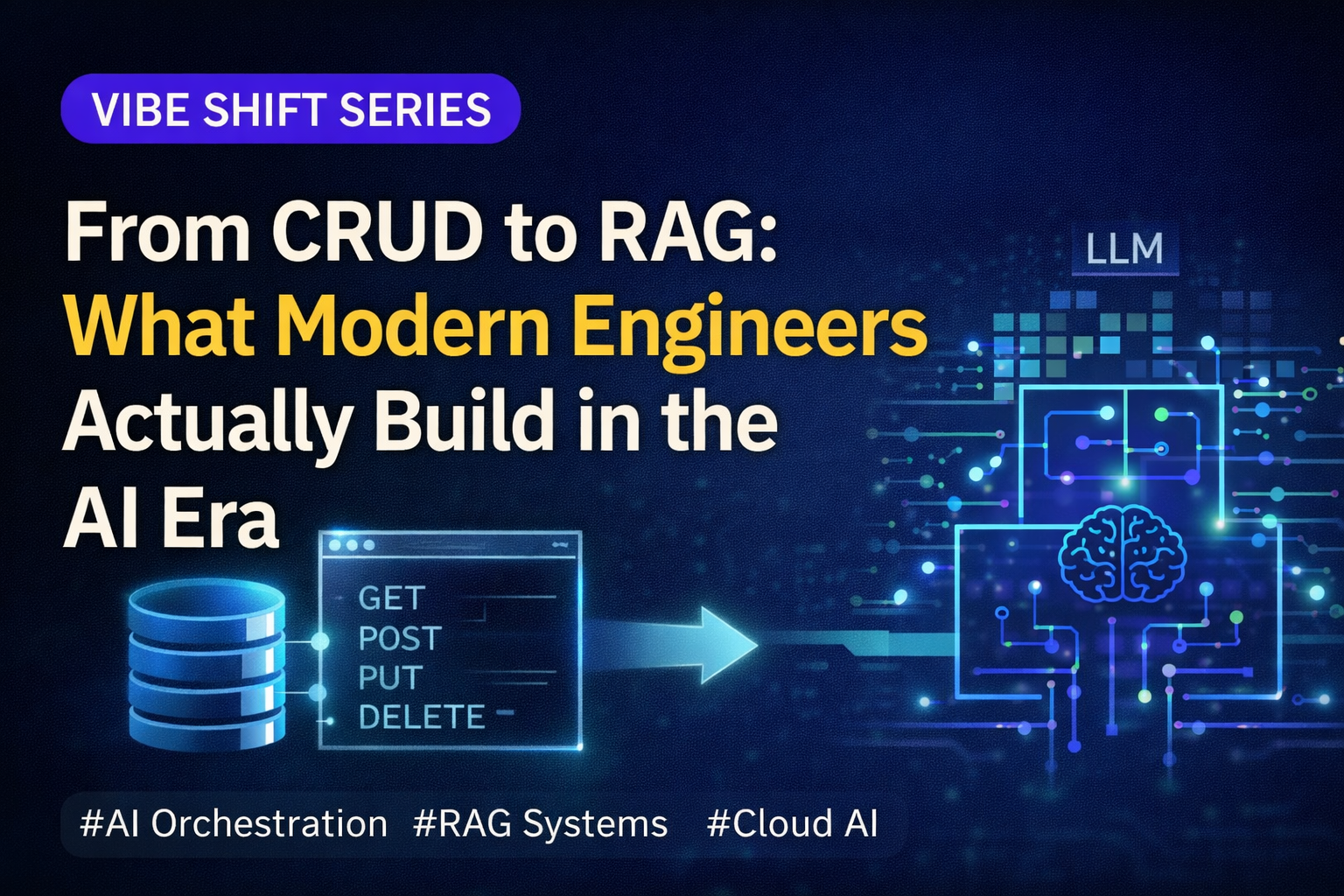
- Building RAG pipelines
- Designing feedback loops
- Monitoring model performance
In traditional coding, you wrote logic directly.
In AI systems, you shape behavior indirectly through:
Data
Prompts
Retrieval
Constraints
That is a different engineering mindset.
Diagram 3: Control Mechanisms in Traditional vs AI Systems
Traditional System:
Logic → Deterministic Output
AI System:
Prompt + Data + Context → Probabilistic Output → Evaluation → Feedback Loop
Engineering is no longer only about writing instructions.
It is about controlling probabilistic systems.
Is This Just Hype?
Partially.
Every technological shift creates exaggerated statements.
But the core evolution is real:
- Abstraction layers are rising.
- AI reduces implementation friction.
- Engineers are becoming system designers.
This is similar to:
- Assembly → C
- C → Java
- Manual servers → Cloud
- Now → AI-assisted development
Each step increased abstraction.
None eliminated engineering.
Practical Actions You Should Take
Instead of worrying, do this:
Learn prompt engineering deeply.
Build one RAG system end-to-end.
Understand LLM evaluation metrics.
Deploy an AI project to cloud.
Study cost-performance optimization.
Do not panic.
Upgrade strategically.
Final Thought
Vibe coding is not the end of programming.
It is the evolution of programming.
The engineers who thrive will not be those who type faster.
They will be those who think better, design better, and orchestrate smarter systems.
In the AI era:
Systems > Syntax
Thinking > Typing
Adaptation > Fear
This is the real VibeShift.