When we use tools like ChatGPT or other AI models, the responses feel instant and intelligent.
But under the hood, something very structured is happening.
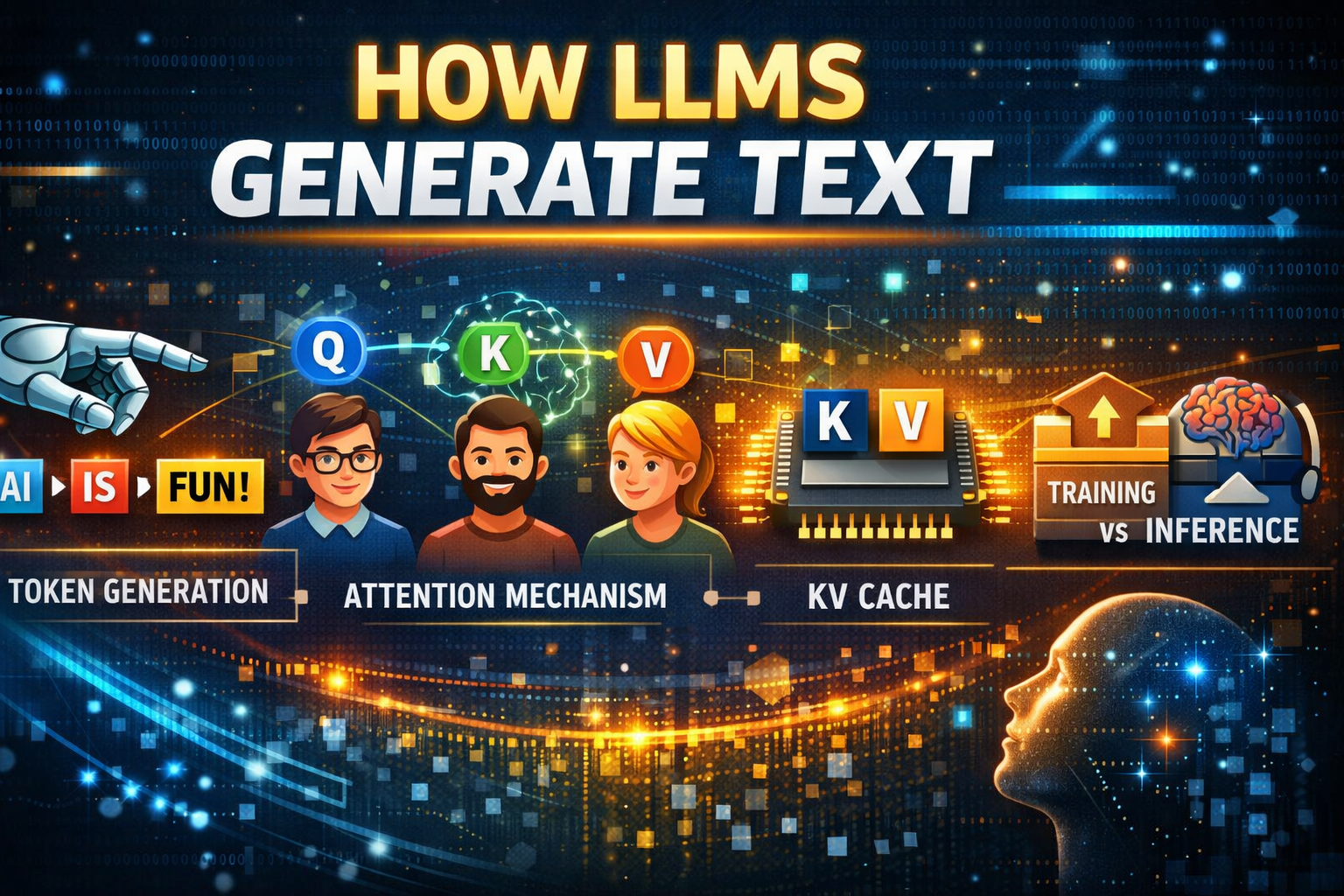
In this blog, let’s break it down step by step in a simple, human way — from token generation → attention → training vs inference.
The Mechanics of Token Generation
One of the most misunderstood parts of AI models is:
How do they generate text so fast?
The answer lies in two phases.
The Mechanics of Token Generation
One of the most misunderstood parts of AI models is:
How do they generate text so fast?
The answer lies in two phases.
"Explain AI in simple terms"The model processes all words at once.
This is called the Pre-fill Phase
What happens here?
- Entire sentence is converted into tokens
- Processed in parallel using GPU
- Context understanding is built
Why is this fast?
Because GPUs are designed for:
Parallel computation
So multiple tokens are processed simultaneously.
Phase 2: Autoregressive Generation (One-by-One)
Now comes the interesting part.
Once input is processed, the model starts generating:
Token 1 → Token 2 → Token 3 → ...One token at a time.
Why one-by-one?
Because:
Each next word depends on previous wordsExample:
"The capital of India is ____"The next token depends on context.
KV Cache – The Hidden Speed Booster
Without optimization, this process would be slow.
That’s where KV Cache comes in.
Problem Without KV Cache
Every time a new token is generated:
Model recomputes entire sequence ❌Solution: KV Cache
The model stores:
- Keys (K)
- Values (V)
From previous tokens.
Result
Reuse past computations → Faster generationThis is why responses feel smooth and quick.
Attention Explained Using a “Group of Friends”
Attention is the core innovation of Transformers.
Let’s simplify it.
Analogy: Group of Friends
Imagine:
- Each word = a person
- All sitting in a circle
What happens?
- They talk to each other:
“What do you know about this topic?”
Example
Sentence:
"Data visualization is powerful"The word “Data” learns context from:
- “visualization”
- “powerful”
External Knowledge
- After discussion:
They go “home” and check their knowledge:
This represents:
Model weights (learned knowledge)
Breaking Down Q, K, V
Now let’s decode the famous terms:
Queries (Q)
Questions a token asksExample:
"What is related to me?"Keys (K)
Labels or identifiers of other tokensValues (V)
Actual information/contentSimple Way to Remember
Query → Ask
Key → Match
Value → Get information
Training vs Inference (Very Important)
This is where many people get confused.
During Training
Model is learning.
Uses:
- Gradient Descent
- Loss Function
Analogy: Cooking Sambar
- First attempt → wrong taste
- Adjust ingredients
- Try again
Repeat until correct
What changes?
Weights (model parameters)These weights generate Q, K, V.
During Inference (When YOU use it)
Now model is:
Fully trainedNo learning happens.
Key Point
Weights are frozenMeaning
Model uses its:
“trained brain”To generate responses.
The Real Magic: Scaling Laws
Here’s the biggest insight
Transformers (2017)
Core architecture is:
Relatively simple (~200 lines logic)What changed?
Not the architecture…
But:
More data
More compute
More parameters
Result
Tokens become:
Smarter
Context-aware
Capable of reasoning
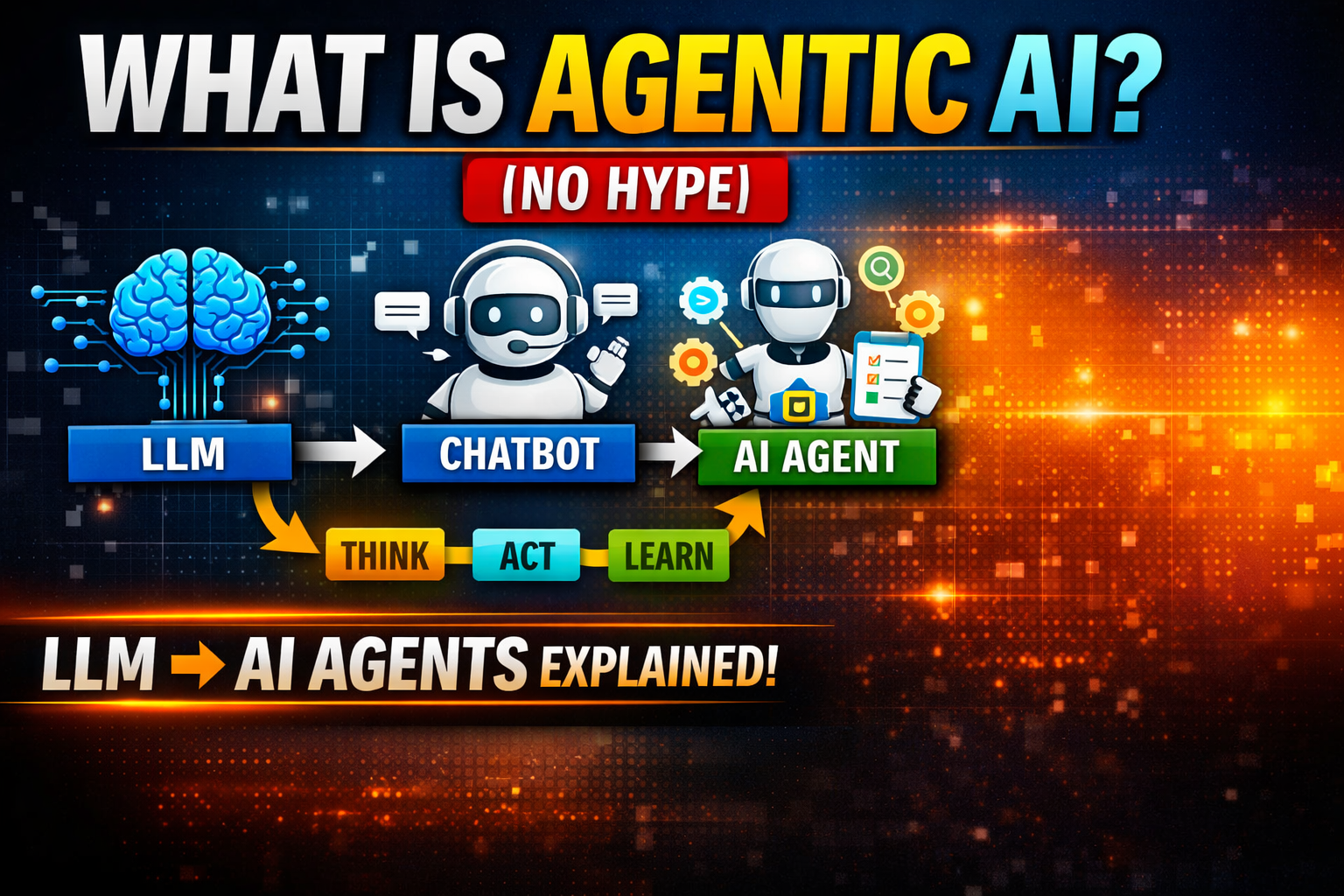
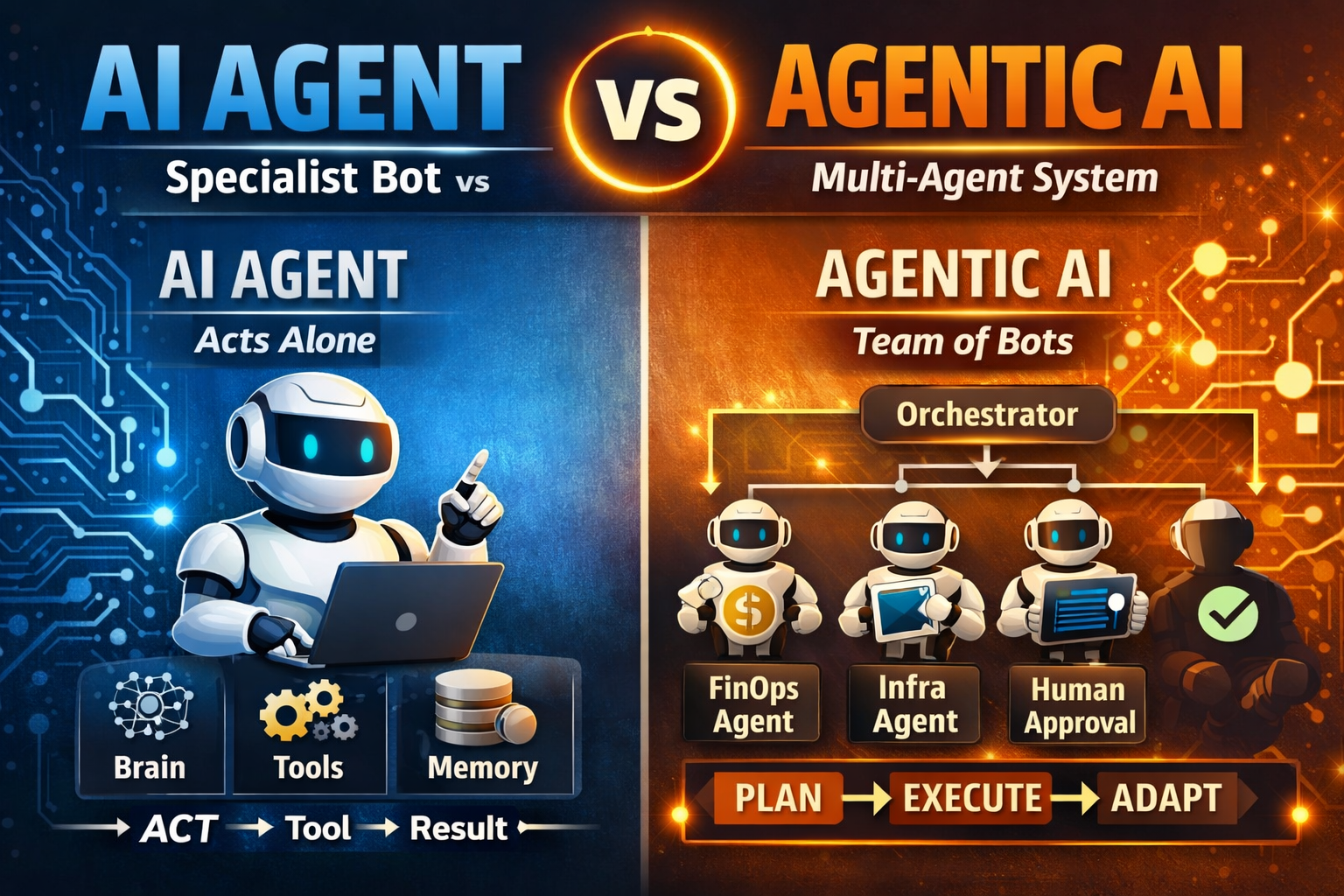
Why This Matters for AI Agents
Now connect this to your bigger vision.
AI Agents rely on:
- Token generation
- Context understanding
- Sequential reasoning
Example
	User query
		↓
	Token reasoning
		↓
	Tool usage
		↓
	Response
This is how modern AI agents think step-by-step
Final Takeaways
✔ LLMs process input in parallel first
✔ Then generate output token by token
✔ KV Cache makes it efficient
✔ Attention = tokens learning from each other
✔ Training = learning phase
✔ Inference = usage phase
✔ Scaling = real power behind modern AI
Closing Thought
The magic of AI is not in complexity…
It’s in simple ideas scaled to massive levels.
What Next?
If you’re building AI systems or learning deeply:
Start thinking like this:
		Not just “What AI does?”
		But “How AI thinks?”