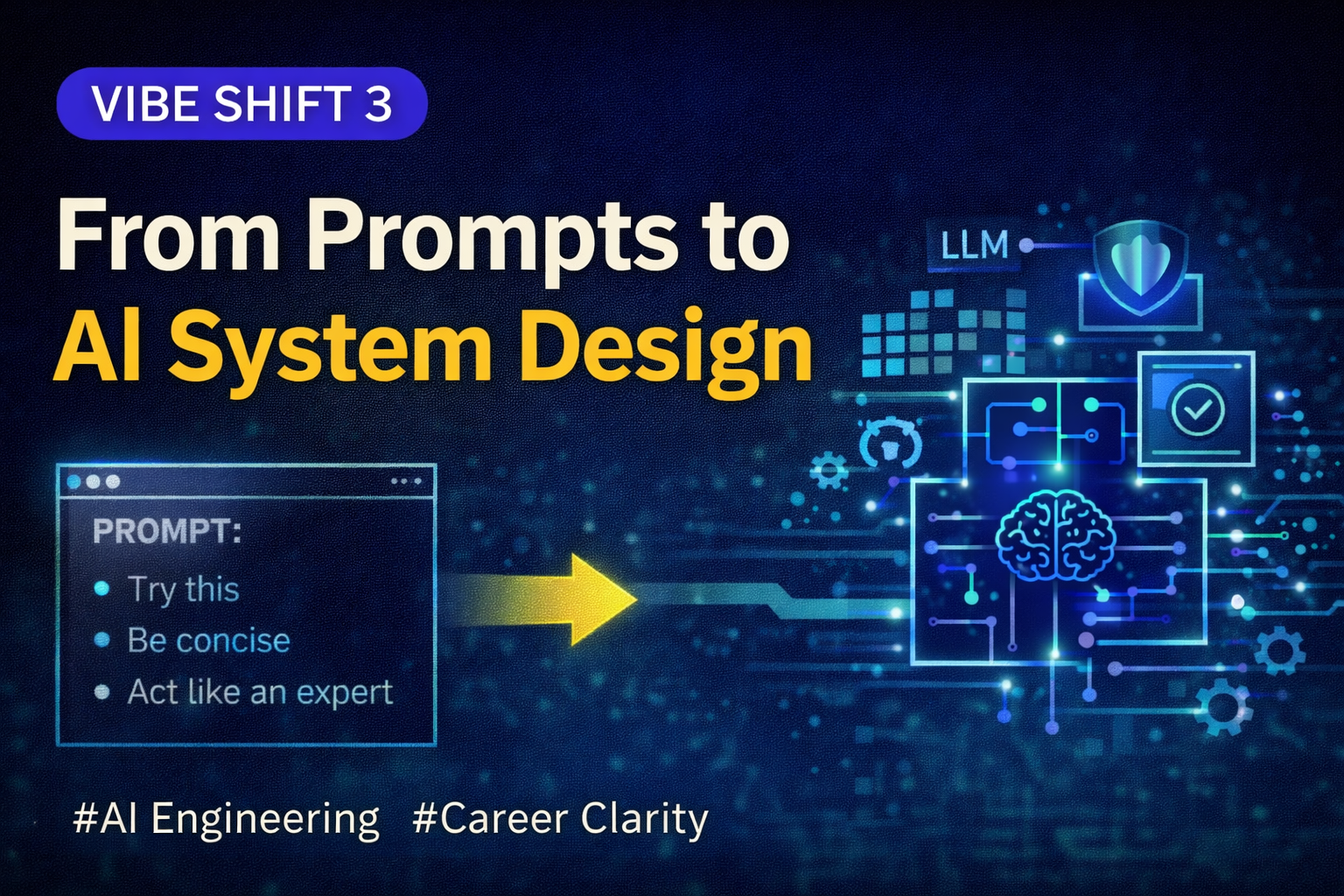
The Hidden Foundation Behind Modern AI Systems
When people talk about AI, they usually focus on models, prompts, or tools.
But in real-world AI systems, something more fundamental is happening.
AI needs structure. AI needs memory. AI needs context.
In a recent session, Balaji Viswanathan highlighted a powerful idea:
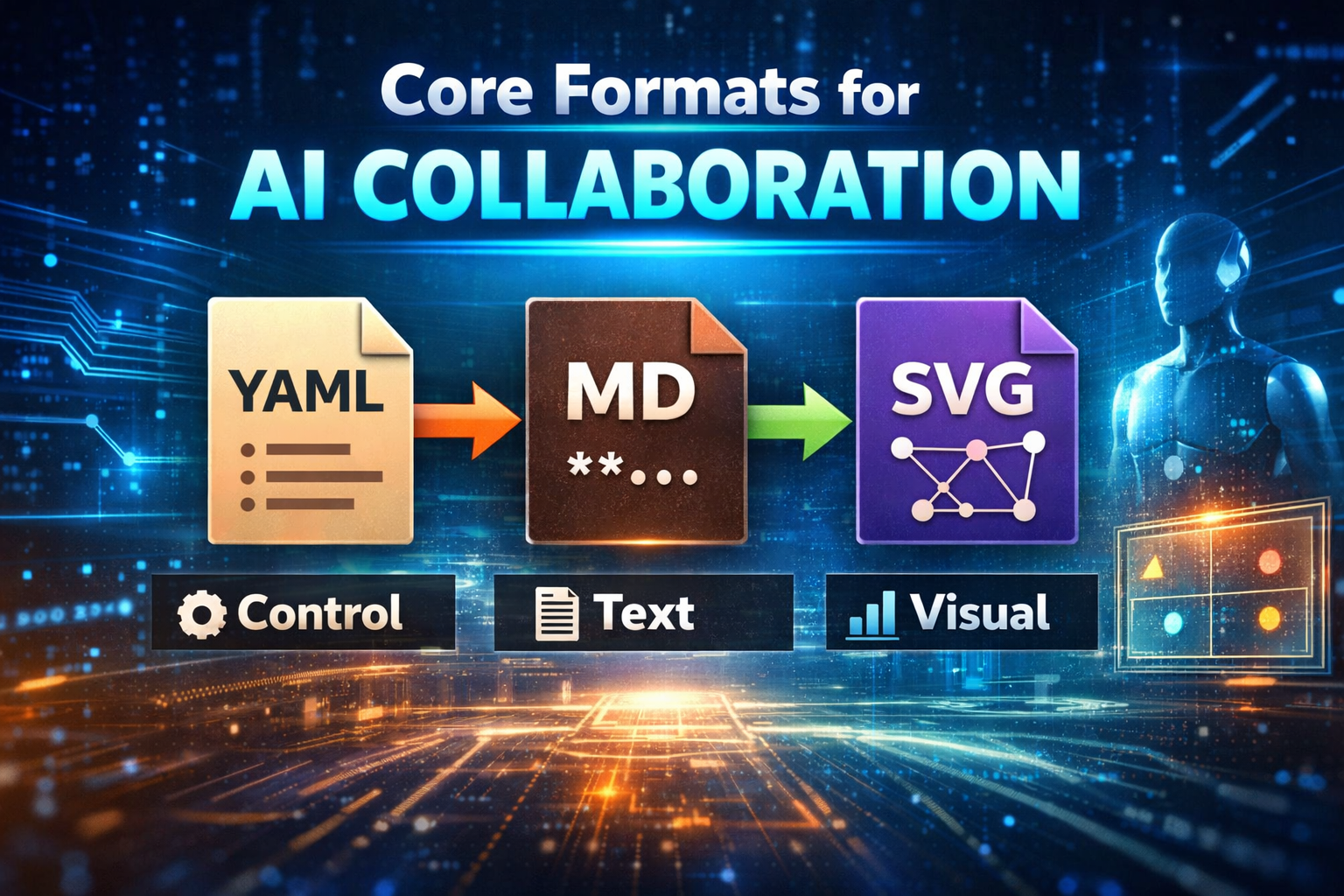
Modern AI systems are not just built with code — they are built using three core formatsThese formats act as the memory + communication layer between humans and AI agents.
Let’s break this down step by step.
Step 1: YAML (.yaml) – The Control Layer
Think of YAML as the brain configuration file of your AI system.
What makes YAML powerful?
✔ Human-readable
Unlike JSON, YAML avoids curly braces. It uses indentation (like Python), making it clean and easy to edit.
✔ Machine-parseable
Even though it looks simple, it is strict.
If the structure is wrong, systems immediately throw errors.
✔ Acts like a database
You can store structured information in a clean hierarchy.
Real Use Cases
- Defining prompt hierarchy
- Setting agent roles
- Managing permissions
Example:
- Base prompt (company-level)
- Feature-level prompt
Role-based prompt (Coder, Reviewer, PM)
Simple Mental Model
YAML = Control Center
Diagram 1: AI Collaboration Layers
          					+----------------------+
          					|     YAML (.yaml)     |
          					|   Control Layer      |
          					| (Rules, Prompts,     |
          					|  Permissions)        |
          					+----------+-----------+
                     					|
          					+----------v-----------+
          					|   Markdown (.md)     |
          					|   Text Layer         |
          					| (Docs, Instructions, |
          					|  Communication)      |
          					+----------+-----------+
                     					|
          					+----------v-----------+
          					|     SVG (.svg)       |
          					|   Visual Layer       |
          					| (Diagrams, Charts,   |
          					|  Presentations)      |
          					+----------------------+
Step 2: Markdown (.md) – The Text Layer
If YAML is control, then Markdown is communication.
Why Markdown?
✔ Simple formatting
Use **bold**, *bullets*, # headings — no complex HTML needed.
✔ AI-friendly format
Most Large Language Models (LLMs) are trained heavily on Markdown.
✔ Universal usage
Used in:
- Documentation
- Notes
- AI instructions
Hybrid Format (Very Important)
- Modern tools combine YAML + Markdown.
- Used in tools like:
- Notion
- Obsidian
- Claude
- Structure:
							---
							title: AI Agent Instructions
							role: reviewer
							permissions: read-only
							---


							## Instructions
							Review the code and provide feedback...
YAML at top = metadata
Markdown below = actual content
Simple Mental Model
Markdown = Conversation LayerStep 3: SVG (.svg) – The Visual Layer
Now comes the most underrated part — visuals.
Why SVG?
✔ Code-based graphics
SVG is not an image — it’s code.
✔ AI can generate it
Since it’s structured, AI can create diagrams easily.
✔ Highly precise
Perfect for:
- Architecture diagrams
- Charts
- UI mockups
- Slide decks
Real Use Cases
- Auto-generated architecture diagrams
- Competitive analysis charts
- PowerPoint slides
Simple Mental Model
SVG = Visualization LayerDiagram 2: How AI Uses These Formats Together
									User Input
    									|
    									v
									+------------------+
									| Markdown (.md)   |
									| Instructions     |
									+------------------+
        									|
        									v
									+------------------+
									| YAML (.yaml)     |
									| Rules & Context  |
									+------------------+
        									|
        									v
									+------------------+
									| AI Processing    |
									| (LLM / Agent)    |
									+------------------+
        									|
        									v
									+------------------+
									| SVG Output       |
									| Visual Results   |
									+------------------+
Real Example: Competitive Analysis Sprint
To make this practical, let’s look at a real use case discussed in the session.
The Task
Build a competitive analysis tool
Example:
A forecasting product using SAP data for CFOs
What AI Does
- Reads Markdown instructions
- Uses YAML context (industry, rules)
- Generates SVG visualization
Output
- A 2x2 matrix like:
- X-axis → Organization Size
- Y-axis → Maturity Level
- Showing:
- Competitors
- Market positioning
Key Insight
Here’s the most powerful takeaway from Balaji Viswanathan:
“Communication to the AI is underestimated.”If you know what to ask, AI becomes powerful
If not, even powerful AI becomes useless
Final Thoughts
Most people think AI success depends on:
❌ Models
❌ Tools
❌ APIs
But in reality:
✅ Structure (YAML)
✅ Clarity (Markdown)
✅ Visualization (SVG)
These three together define how effective your AI system will be.
Simple Summary
| Format | Role | Purpose |
| YAML | Control | Rules, prompts, permissions |
| Markdown | Communication | Instructions, documentation |
| SVG | Visualization | Diagrams, outputs |
If you are building AI systems, start thinking beyond code.
Start thinking in formats, structure, and communication.
That’s where real AI engineering begins.