
Introduction: Noise vs Reality
Artificial Intelligence is everywhere today. Social media is full of bold claims: “AI will replace engineers”, “Just learn a few tools and you’re safe”, “Coding is dead”. For mid-level engineers (5–12 years of experience), this creates confusion and anxiety.
This blog is written calmly and practically — not to create fear, and not to sell hype. The goal is to explain what is really changing, what is not, and how mid-level engineers can stay relevant and grow in the AI era.
Step 1: Understand the Real Shift (Not the Headlines)
AI is not replacing engineering.
AI is changing how engineering work is done.
Earlier:
- Engineers wrote most of the code manually
- Learning was slower
- Repetition consumed a lot of time
Now:
- AI can generate code, explanations, and examples instantly
- Learning is faster
- Repetitive work is reduced
The shift is from writing more code → thinking better about problems.
Diagram 1: Traditional Engineering vs AI-Assisted Engineering
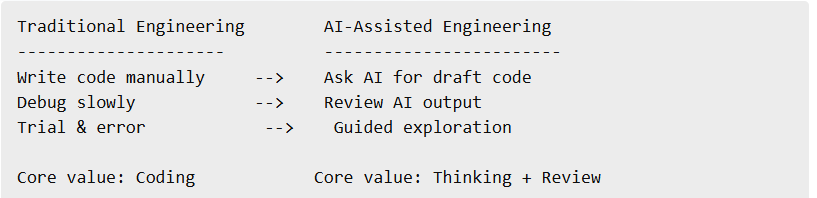
AI speeds up execution, but it does not replace understanding.
Step 2: Vibe Coding vs Engineering Mindset
This is where many engineers get confused.
Vibe Coding
- Asking AI: “Give me code for X”
- Copy-paste driven
- Works well for demos
- Breaks in production
Engineering Mindset
- Asking AI: “Help me think through this system”
- Focus on data flow, edge cases, failures
- Designed for scale and reliability
- Survives real-world complexity
Diagram 2: Two Ways of Using AI
Vibe Coding Engineering Mindset
----------- -------------------
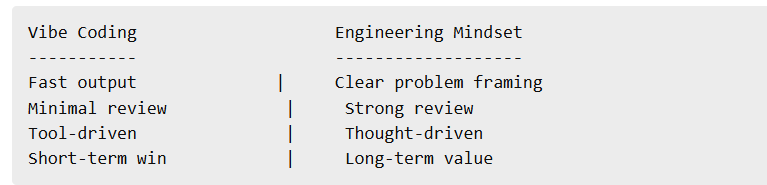
AI amplifies who you already are.
- Weak thinking → faster mistakes
- Strong thinking → faster results
Step 3: What AI Actually Replaces
Let’s be honest.
AI does replace some things:
- Repetitive coding
- Boilerplate generation
- Syntax memorization
- Guess-based trial and error
But AI does not replace:
- System design
- Trade-off decisions
- Data understanding
- Debugging complex failures
- Accountability
If your value is only writing syntax, that is risky.
If your value is thinking like an engineer, AI becomes an advantage.
Step 4: Why Mid-Level Engineers Still Matter
Mid-level engineers sit at a powerful position:
- You understand fundamentals
- You have seen failures
- You know business constraints
- You can guide juniors and tools
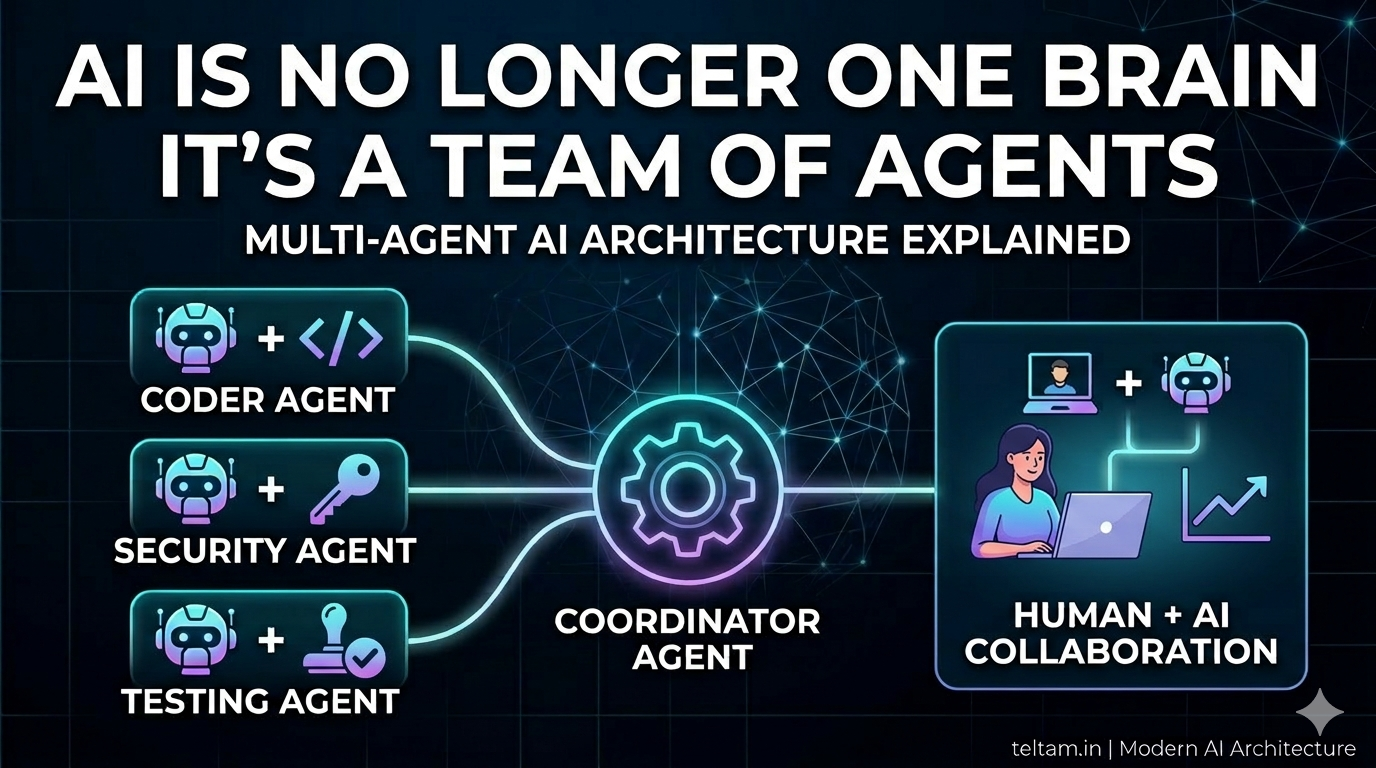
AI can act like a junior engineer who never gets tired.
But someone still needs to:
- Ask the right questions
- Validate the answers
- Decide what goes to production
Diagram 3: AI as a Junior Engineer
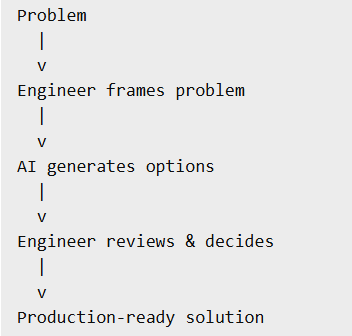
The engineer remains responsible.
Step 5: How to Use AI Correctly (Step-by-Step)
Here is a practical approach mid-level engineers can follow:
1. Frame the problem clearly
Before asking AI, write down:
- What is the goal?
- What are constraints?
- What data is involved?
2. Use AI for exploration
Ask AI to:
- Suggest approaches
- Explain alternatives
- Highlight risks
3. Review like a senior
Always check:
- Edge cases
- Performance
- Security
- Maintainability
4. Own the decision
Never say:
“AI wrote it.”
Say:
“I reviewed it and chose this approach.”
Step 6: Skills That Will Compound Over Time
Focus on skills that don’t expire:
- Problem decomposition
- System thinking
- Data fundamentals
- Communication
- Teaching others
Tools will change. Thinking skills will not.
Final Thoughts: Calm Confidence Beats Panic
Mid-level engineers are not becoming irrelevant.
But complacency is dangerous.
Learn AI. Use AI. But protect and strengthen your engineering mindset.
That combination — experience + AI + clear thinking — is extremely powerful.
This is the direction we explore further on Teltam.in and SomethingTalk1.
If you found this useful, you are already thinking in the right direction.